Quick answerLead time is one of the factors that decides whether a system integrator wins or loses an education or NGO tender. A supplier controls only the first half — how fast equipment is built and dispatched — while freight, customs clearance, and installation sit with the integrator. The way to win is a documented dispatch commitment you can build a realistic delivery schedule around, not the most optimistic date on paper.
Most tender bids compete on price and specification. But for grant-funded and government education projects, the delivery schedule is frequently scored as well — and a delivery date you miss can cost the contract or trigger penalties. Lead time is one of the least-discussed parts of AV sourcing, yet for system integrators chasing time-bound projects it is often the difference between a compliant bid and a winning one. This guide breaks down what actually drives interactive flat panel lead time, which parts of it you control, and how to turn a fast, reliable dispatch into a competitive edge in your next bid.
Why delivery time is a tender scoring factor, not just a logistics detail
For many of the projects system integrators bid on, the delivery date is fixed and immovable:
- NGO and grant-funded programs run inside disbursement windows — equipment has to be deployed before the funding period closes, or the budget is lost.
- Public-school projects have to be classroom-ready before the academic term starts; the calendar will not move for a late shipment.
- Government tenders often state a required delivery period outright. A bid that cannot meet it can be ruled non-compliant before the price is even read.
On top of that, late delivery can mean liquidated damages or losing eligibility for the next tender. The trend across education AV procurement is clear: a credible delivery schedule increasingly carries weight alongside price and specification, not behind them.
The two halves of lead time — and which half your supplier controls
The single most useful thing to understand about lead time is that it is not one number. It is two halves with two different owners. The supplier controls how quickly equipment is produced and made ready to ship. Everything after that — freight, customs clearance, and the last mile to site — sits with you and your local logistics. So when you ask a supplier “how fast can you deliver?”, the honest answer is really about dispatch readiness; you then add your own freight and clearance buffer to commit a site-delivery date in the bid.
| Stage | What drives it | Who controls it |
|---|---|---|
| Sample & spec sign-off | How fast the configuration is approved | Supplier (ships sample) + integrator |
| Production or stock pull | Standard config vs OEM; order quantity | Supplier |
| QC & export documents | Order size | Supplier |
| Ocean or air freight | Route and shipping mode | Integrator / freight forwarder |
| Customs clearance | Destination country rules | Integrator (local) |
| Last-mile delivery & install | Site readiness | Integrator |
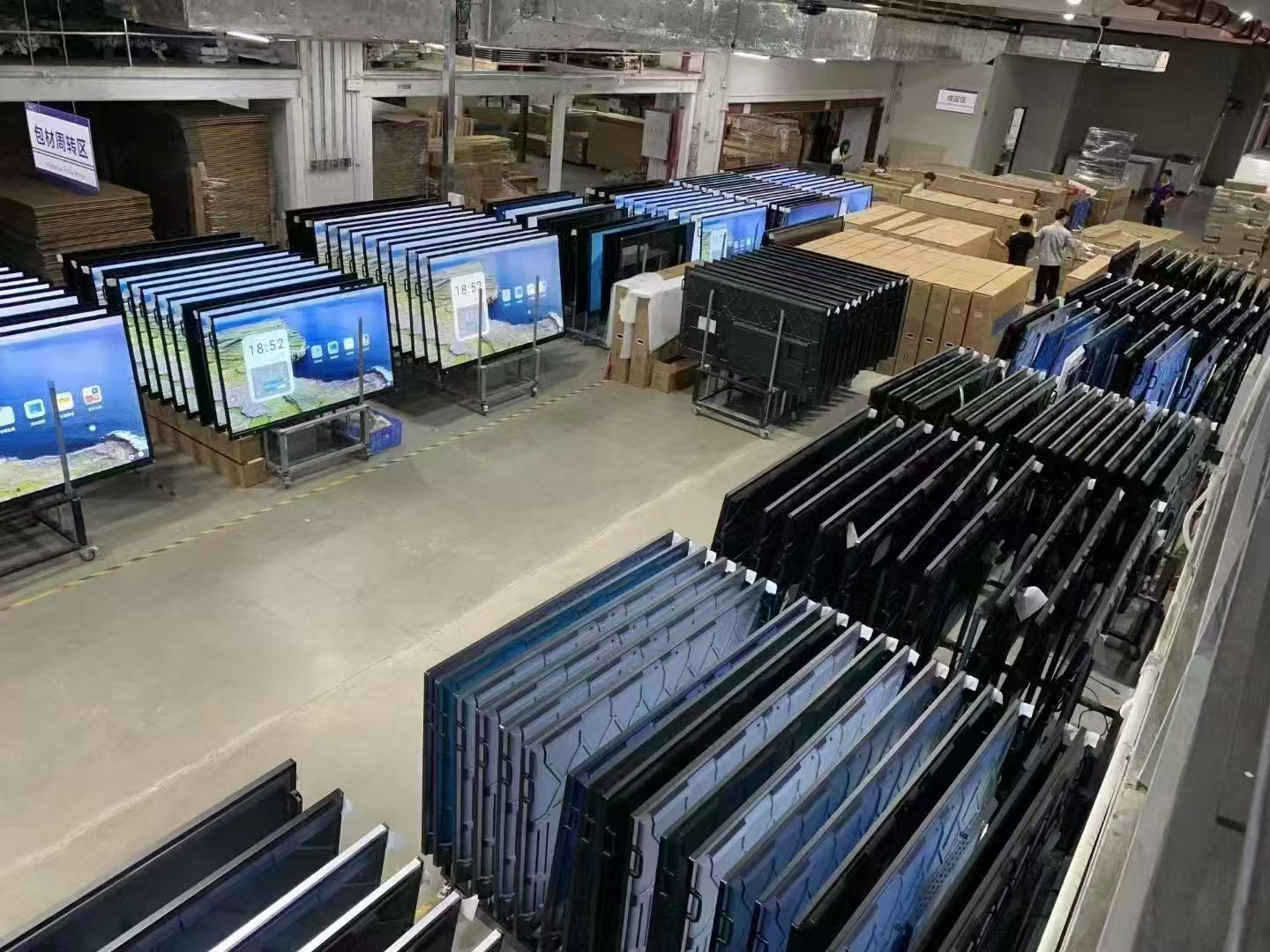
Tralltech, a smart classroom and video conference room solution provider that manufactures most of its hardware in-house, focuses on the half it owns: getting standard orders production-ready and dispatched quickly and predictably, so the integrator can plan the logistics half with confidence.
What makes supplier-side lead time fast — and predictable
Speed matters, but predictability matters more: a delivery date you can document beats a faster one you might miss. Four factors decide both halves of that equation on the supplier side.
Stock on standard configurations. Standard interactive flat panels and common audio accessories are typically held in stock, so a modest, standard order can be pulled and dispatched quickly — generally within about one to two weeks, depending on quantity.
Quantity. Small and mid-size orders ship fast from stock; very large orders need a dedicated production run and a longer, scheduled lead time. Always ask for the lead time at the quantity you actually need, not a generic figure.
Standard versus OEM. Custom branding, a custom launcher or UI, or hardware changes require a production run rather than a stock pull, so they add time, confirmed at quotation. When the tender deadline is tight, standard configurations are the safe choice.
Sea versus air. Sea freight is the standard, cost-efficient mode for a full order; air is generally reserved for samples and urgent small shipments. Build the freight half of your schedule around sea transit unless the timeline genuinely demands otherwise.
How to turn lead time into a winning bid
A recent project shows how this plays out. A system integrator was bidding on a modest education tender — around 25 interactive flat panels, 25 wireless microphones, and a handful of accessories. Because the configuration was standard and the items were in stock, the order was ready to ship in under a week. That let the integrator put a one-week dispatch commitment into the bid with confidence — and that credible, fast delivery promise was one of the factors that helped win the tender.
The lesson generalises into four steps any integrator can apply:
- Get a documented dispatch commitment from your supplier before you submit — in writing, at your real quantity.
- Favour standard configurations when the timeline is tight; save OEM customisation for projects with schedule headroom.
- Add a realistic freight, customs, and installation buffer on top of the dispatch date, and commit a site-delivery date you can actually hit.
- De-risk the configuration up front with a sample, so there are no surprises after the PO that reset the clock.
Frequently asked questions
How long does it take to manufacture interactive flat panels for an order?
Standard configurations are typically held in stock and can dispatch within about one to two weeks, depending on quantity. Larger orders that need a dedicated production run take longer, so ask for a lead time at your specific quantity rather than a generic figure.
Does OEM or customisation add to the lead time?
Yes. Custom branding, UI, or hardware changes require a production run instead of a stock pull, so they add time, confirmed at quotation. For tight tender deadlines, standard configurations dispatch fastest.
What delivery date should I commit to in a tender bid?
Base it on a written dispatch commitment from your supplier, then add your own freight, customs clearance, and installation buffer. A credible date you can meet protects your bid far better than the most optimistic one.
Key takeaways
- For education and NGO tenders, a credible delivery schedule can weigh as heavily as price and specification.
- Lead time has two halves: supplier-side dispatch (production and stock) and integrator-side logistics (freight, customs, installation). Know which half you control.
- Standard, in-stock configurations dispatch fastest — generally within about one to two weeks for modest orders; OEM and very large orders take longer.
- Win bids with a documented dispatch commitment plus a realistic logistics buffer, never an optimistic guess.
Written by the Tralltech Technical Team · Last reviewed: June 2026
Related: Smart Classroom Solution · Offline Education Solution · Contact / Request a Sample